Translation Is Not Enough: What Makes a Book Publication-Ready in Another Market
Foreign-language publication requires editing, cultural adaptation, metadata, category strategy, cover direction, keywords, copywriting, and QA.
By Daniel Hart · MAQUINE Editorial Desk
A house editorial byline, not a client identity or external endorsement.

A translated manuscript is not automatically a publishable edition. Translation moves meaning across language; publication readiness moves a book into a market. The difference is practical. A rightsholder who receives only a translated file still has to solve revision, proofreading, glossary consistency, title adaptation, metadata, store copy, keywords, category selection, contributor notes, cover direction, and delivery requirements. Without those pieces, the edition may be linguistically competent and still commercially underprepared.
Editorial adaptation is one of the first differences. It protects the reading experience without flattening the source text. Idioms, humor, emotional register, dialogue rhythm, cultural references, genre cues, and reader expectations all need judgment. A literal rendering may preserve sentence-level meaning but lose tone. An over-adapted rendering may erase the book. The goal is not to make the text generic; it is to make the target-language reader experience the book as intentionally published rather than mechanically converted.
Revision and proofreading are separate safeguards. Revision asks whether the localized manuscript carries the right voice, accuracy, continuity, and genre feel. Proofreading catches surface errors after the text has settled. For series, QA also includes recurring terminology, character names, invented vocabulary, places, style conventions, and prior-book decisions. A reader may forgive one awkward line. They rarely forgive a series that changes a central term from book to book. Publication-ready work makes consistency visible.
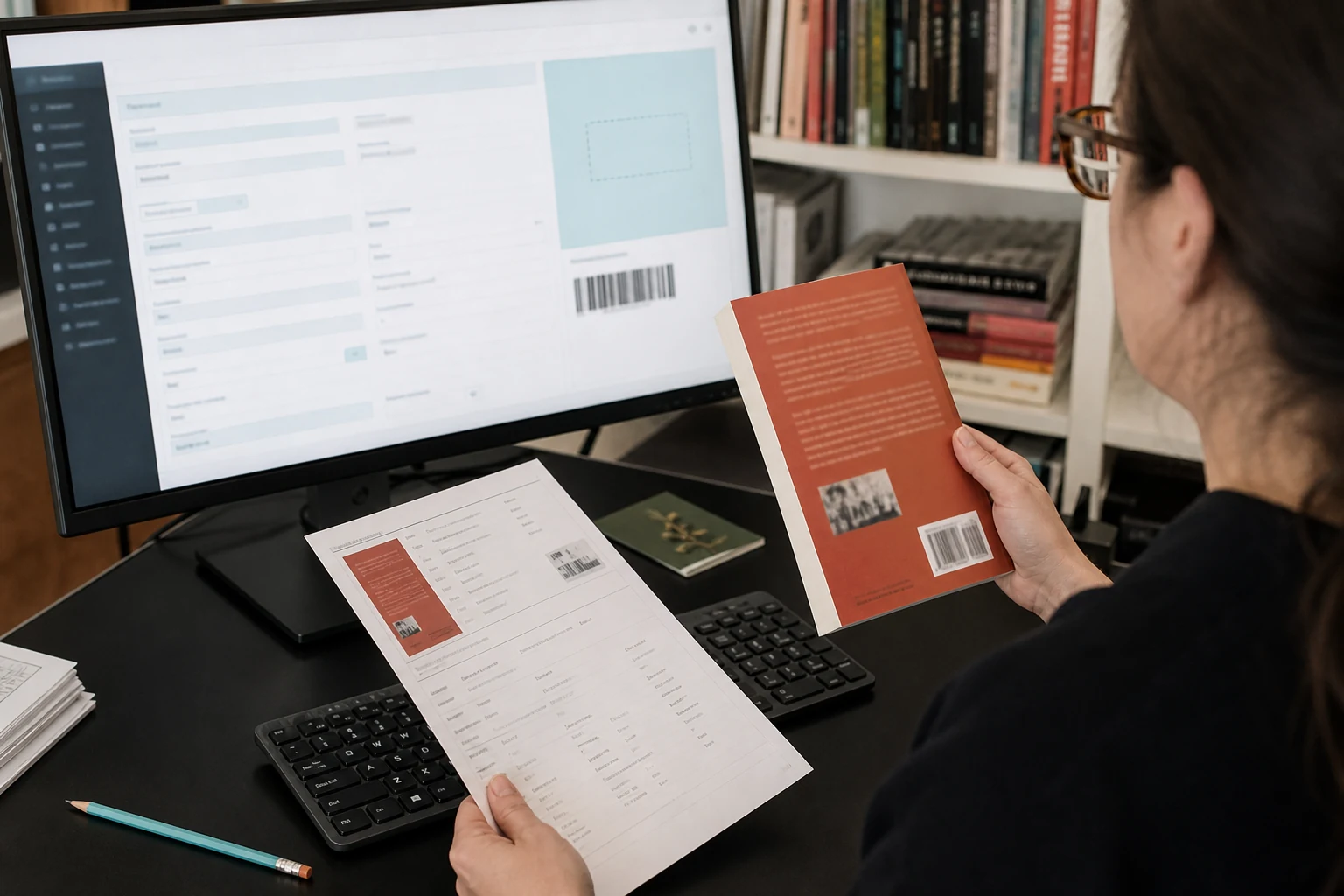
Metadata is where many promising editions weaken. A title may need a different subtitle strategy. A category that works in one store or territory may not match another. Keywords should reflect reader search behavior, not only source-language phrasing. Store descriptions need rhythm, promise, and local market fluency. Author bios may need contextual framing. Comparable titles may shift. Metadata is not clerical residue after translation; it is one of the ways a foreign-language edition becomes discoverable and credible.
Copywriting is also part of the product. Back-cover copy, retailer descriptions, ad lines, newsletter language, rights-sheet language, and pitch copy each serve different readers. The copy for a potential publishing partner is not the same as the copy for an ebook store. A rights sheet should help a professional decide whether to request more material. A store description should help a reader decide whether to buy. Treating all copy as one generic description wastes the opportunity to position the book properly.
Design direction matters even when MAQUINE is not producing the final cover. The rightsholder should know whether the existing cover travels, whether typography will support the target language, whether subtitle length creates layout issues, and whether category expectations differ. A romance cover, business cover, or literary cover can send different signals across markets. Publication-ready localization should at least identify where cover and visual positioning need review before release.
MAQUINE frames localization as publishing infrastructure because the deliverable is not simply a text. It is a package that helps the rightsholder publish, pitch, or evaluate the next move. A strong package reduces ambiguity: here is the manuscript path, here is the metadata, here are the copy assets, here are the QA notes, here are the rights boundaries, and here is what still requires approval. That is the difference between translated pages and a foreign-language edition ready to enter a market.
A useful distinction is between textual accuracy and publishing fitness. Textual accuracy asks whether the meaning survived. Publishing fitness asks whether the voice, pacing, category signals, front matter, retailer copy, and reading experience work in the destination market. A manuscript can pass the first test and still fail the second. The production brief should require both so that quality is not reduced to error counting.
Revision also needs named responsibilities. A bilingual reviser checks the translation against the source. A target-language editor reads for naturalness, consistency, genre, and reader expectation. A proofreader examines the final text after layout. One person may cover more than one role on a small project, but the passes should remain distinct. Combining them invisibly makes it difficult to know what was checked and what was assumed.
Metadata deserves the same editorial attention as the book. A translated title may need alternatives, a subtitle may need a new promise, and categories or keywords may not map neatly between retailers. The store description should be written for the target reader rather than translated sentence by sentence. These elements often form the first page a reader sees, which makes them part of the edition rather than promotional debris.
Production quality assurance should test the files people will use. Ebook navigation, typography, embedded fonts, chapter breaks, image quality, print margins, running heads, hyphenation, and accessibility all affect credibility. Review on representative devices and inspect a physical proof when print is planned. A clean manuscript is not evidence that the exported edition is clean.
The acceptance record closes the loop. It should list approved terminology, unresolved choices, final file names, version dates, known limitations, and the person who approved each stage. That record gives the rightsholder a defensible master package and makes later corrections faster. Publication readiness is ultimately an operating condition: the text, commercial information, files, and approvals agree with one another.